 Name: A. H. Maslow
Born: April 1, 1908 in Brooklyn, New York
Died: June 8, 1970 in Menio Park, California
Education: From New York City College he transfered to Cornell, and then transfered back to City College. After graduating he went to graduate school at Wiskonsin College to study psuchology.
Subject of Study: At UW he was past of training as experimental-behaviorist.
Field of Professional Study: Humanistic psychology
Studies and Discoveries:
Qualitios of Self-Actulizing People:
Truth: honest, reality, beauty, pure, clean and unadulterated completeness
Dynamics of self-actualization
People are looking for healthy way of actlyzing themselves rather than selfish sociopathic behavior. People he considered self- actulized had strong connections and meaningful relationships. People whom he observed as self- actualyzed were for example Albert Einstein and Henry David Thoreau.
Hierarchy of Needs
Maslow's fundamental and most popular study.

Peak expiriences
Inbetween the needs of fulfillment, self-actulyzed people expirience many peak expiriences. These are moments of genuine happyness, understanding, acceptance and understanding of reality that make you feel more alive, more part of the world.
Metamotivation
It's a drive that makes people go beyon the basic needs (stated by Hierarchy of Needs) and reach their full potential.
B- Values
Manner of thought during peak expiriences:
Sources: http://en.wikipedia.org/wiki/Abraham_Maslow
========================================================================
Name: Carl G. Jung
 Born: on july 26th, 1875 in Kessewil, Switzerland
 Died: on June 6th, 1961 in Küssnacht, Switzerland
Education: Studiead at University of Basel.
Subject of study: Jung became a medical student, however, after a year of study he became intrigued by paraprsychology.
Field of Professional Study: Analitycal Psychology
Studies and Discoveries:
Collective Unconsciousness
Theory thats states that all mankind shares the same patterns of instincts, memories and instincs inherited from ancestors. These contain aspects such as religion, sciences and morality and are part of our unconscious mind.
Archeotypes
Related to collective unconsciousness, archeotypes are the universally inherited ideas and thought patterns individually present in each person.
Dream Interpretations
Jung believed that dreams are way of communicating with the unconscious mind and therefore reveal something about yoursels. Dreams are main part of personal growth. The interpretation of dreams is confidently placed on the dreamer since he has all necesarry tools needed to "unlock it", which can be achieved simply by discussing these dreams and making connections between what is going on in one's life and his relationships with others.
Alchemy
Alchemysts were people who tried to transform lead into gold. In Carl Jung's theory, alchemy represents transformation. When one translates his dreams, he follows aa process of individuation during which he eliminates the negative characteristic of his personality. This includes understanding mistakes, stop repeating them and thus acquiring consciousness (aka growing up).
Synchronicity
Synchronicity labels a coincidental events that are unrelated yet happened in a meaningful manner. This states that as events can be grouped by cause, they can be also related by meaning. However, if these evnts are connected by cause, thhis theory is negated and the events labeled as "incoincidential".
Sources: http://www.nndb.com/people/910/000031817/
http://en.wikipedia.org/wiki/Carl_Jung
http://faculty.frostburg.edu/mbradley/psyography/carljung.html
http://www.carl-jung.net/collective_unconscious.html
http://www.thefreedictionary.com/collective+unconscious
http://www.quora.com/What-is-alchemy-according-to-Carl-Jung
http://dark-side-of-the-rainbow.com/synchronicity.html
========================================================================
_Austrian_psychiatrist.jpg/220px-Alfred_Adler_(1870-1937)_Austrian_psychiatrist.jpg) Name: Alfred W. Adler
Name: Alfred W. Adler Born: on February 7th, 1870 in Rudolfsheim near Vienna, Austria- Hungary
Died: on May 28th, 1937 in Aberdeen, Scotland
Education: Studied at University of Vienna.
Subject of Study: Studiet to be a physician. He was very interested in psychology, sociology and philosophy, later in neurology and psychiatry.
Field of Professional Study: Individual psychology
Studies and Discoveries:
Inferiority Complex
According to Alder's theory, every child goest through period of inferiority because he is surrounded by stronger, more capable adults. This leads to the strive for power and self actualization. The people who never overcome these feelings then develop inferioritz complex/
Private Intelligence
When a person doesn\t overcome certain feelings as a child, he tends to acquire private intelligence. By that is meant a framework withink his own limits that is intellingent in his own terms, but many times socially unacceptable. For example a robber steals mney, he says that he did it because he could\t get money any other way. \since he wasn\t able to get money any other social way as the other people, in his terms this is the intelligent way of getting them.
Holism
A belief that all the natural systems {physical, biological, chemical, social, economic, mental) work together and can\t be understood individually. Also their properties hsould be viewed as wholes and not as collections of parts.
Sources: http://en.wikipedia.org/wiki/Alfred_Adler
http://psychology.about.com/od/profilesal/p/alfred-adler.htm
========================================================================
Name :Ivan Pavlov
Born: on September 25th, 1849 in Ryazan, Russia
 Died: on February 27th, 1936 in Leningrad, Soviet Union
Education: Pavlov started at Theological Seminary of Ryazan where he studied to become a priest, however, then he got admitted to the University of St. Petersburg. He also entered the Military Medical Academy.
Subject of Study: In St. Petersburg he studied animal physiology, chemistry, organic chemistry and inorganic chemistry.
Field of Professional Study: Behaviorism
Studies and Discoveries:
Classical Conditioning
States that two stimuli assiciate to produce a new leaned response to a person or anme. When he ws studying digestion, he also discovered that whener assistants in lab coats entered the room, the dogs used for experiments started salivating. Those dogs were associating the people with food and therefore they started to salivate.
Sources:
http://www.notablebiographies.com/Ni-Pe/Pavlov-Ivan.html#b#ixzz2CkOyOZLp
========================================================================
Name: Stanley Milgram
 Born: on August 15, 1933 in New York City
Died: on December 20, 1984 in New York City
Education: Bachelors degree acquired from Queens College in New York and PhD from Harvard.
Subject of Study: In New York Milgram studied political science and at Harvard he received Phd in social psychology.
Field of Professional Study: social psycholgy
Studies and Discoveries:
Obedience to authority figures
 An experiment that Milgram set up consisted of 1 examinator, actor and the test subject. The test subject T was considered a teacher that was supposed to give painful electroshocks to the actor, learner L every time he answers incorrectly to a question and increase the woltage after each time. If the test subject T wanted to stop the experiment, the examinator would respond each time:
1st time: Please continue.
2nd time: The experiment requires that you continue.
3rd time: It is absolutely essential that you continue.
4th time:You have no other choice, you must go on.
The experiment was stopped after the test subject wanted to discontinue after 4th time or after the test subject shocked the actor 3 times of the highest possible voltage. The electroshocks were faked but the study showed, that people go beyond their moral beliefs if pressured by authority.
Sources: http://en.wikipedia.org/wiki/Milgram_Experiment
==========================================================================
 Name: Paul Ekman
Born: February 15, 1934 in Washinghton D.C.
Died: not yet
Education: University of Chicago (undergraduate enrollment),New York University (bachelors degree), Adelphi University (PhD)
Subjectc of Study: Clinical psychology (PhD)
Field of Professional Study: Behavioral Science
Studies and Discoveries:
Measuring Nonverbal Communication
In this study Ejkman attempted to find a method to measure non-verbal communication. At first he focused mainly on facial expressions and the muscle movement in them. Later on he also focused on body language and tried to conclude his theory with an infamous cross-cultural studies (comparing data from beavior of multiple cultures).
Emotions as Universal Categories
This studies shows that there are 6 universal emotions; anger, disgust, fear, happiness, sadness and surprise. These emotions are detectable in all cultures even though the may be expressed slightly differently in different circumstances (shows difference between cultures). In the 1990s he added more emotions that, however, cannot be detected from the movement of facial muscles: amusement, contempt, contentment, emberassment, excitement, guild, pride in achievement, relief, satisfaction, sensory pleasure and shame.
Sources: http://en.wikipedia.org/wiki/Paul_Ekman
http://en.wikipedia.org/wiki/Cross-cultural_studies
==========================================================================
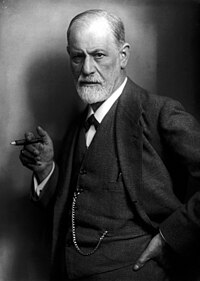
Born: on May 6, 1856 in Freiberg in Mähren, Austrian Empire
Died: on September 23, 193 in London, England
Education: University of Vienna
Subject of Study: medicine
Field of Professional Study: Neurology, Psychoanalysis, Psychotherapy
Studies and Discoveries:
Conscious and Unconscious Mind
Freud stated that our mind consisted of the conscious and the uncoscious mind. The conscious mind included part of memory and also rational thing, in other words, everything that we could recall and withdraw at any moment. The uncoscious part were memories and feelings that we aren't aware of, which, however, exist and continue to affect our behavior and doings.
Psychoanalytic Theory of Personality
This theory stated that the human personality is a complex of the Id, Ego and Superego. Id is responsible for the needs and the pleasure drive. The Ego is dealing with reality and its job is to satisfy the Id in an acceptable manner. The Superego is the guidline for judgements in terms of "right" and "wrong".
Life and Death Drives
Freud stated that human instincs fall either into the Life drive category or the Death drive category. Life instincs, also know as Eros, are the instincts to survive and continue life aka reproduction. This reffers to mainly sexual instincts but also includes avoidance of pain, thirst and hunger. The energy created by these psychosexual instincts is called libido.
The Death drive, Thanatos, proposes that the "goal of life is death". When a person expiriences something traumatic, such as war, he to subconsciously becomes to invite death. However, this impulse is fought by the Life drive. If the energy created by the Thantos is directed towards others it is expressed as agression and violence.
Psychosexual Development
Probably his most famous theory states that throughout the development, a person becomes fixated to different objects as a result of the libido, in other words they are porymorphously perverse. First stage is the oral stage, where child seeks pleasure from sucking on differen objects. Following is the anal stage (pleasure from passing the poop), then follows the phallic stage. In this stage, males become atracted to their mothers as sexual objects, this is called Oedipus Complex. The girls become fixated on their fathers, which is reffered to as the Electra complex, yet Freud believed that this type of complex was bisexual and therefore directed to both parents. This feeling is the unavoidable urge for incest that must be repressed. The latency stage is a more stable period where child, with the superego present, accepts that its longings for parents cannot be fulfilled and therefore this stage is the time for the improvement of self. Genital stage is a stage of sexual maturity that, however, may not be achieved if the phollical stage is not dealt with properly.
Sources: http://www.biography.com/people/sigmund-freud-9302400
http://psychology.about.com/od/sigmundfreud/a/instincts.htm
=========================================================================
 Name: Erik Erikson
Born: on June 15th, 1902 in Frankfurt, Germany
Died: on May 12th, 1994 in Harwich, Massachusetts
Education: After finishing high school he only attended Vienna Psychoanalytic Society, without getting any degrees in college.
Subjects of Study: Psychoanalysis
Field of Professional Study: Developmental psychology, Psychoanalysis
Discoveries and Studies:
Stages of Psychosocial Development
This theory states that humans undergo through social development beginning in infancy through childhood, aduldhood to death.
| Approximate Age[2] | Virtues | Psycho Social Crisis [3] | Significant Relationship[2] | Existential Question[2] | Examples[2] |
|---|---|---|---|---|---|
| 0–2 years | Hopes | Basic Trust vs. Mistrust | Mother | Can I Trust the World? | Feeding, Abandonment |
| 2–4 years | Will | Autonomy vs. Shame and Doubt | Parents | Is It Okay To Be Me? | Toilet Training, Clothing Themselves |
| 4–5 years | Purpose | Initiative vs. Guilt | Family | Is It Okay For Me To Do, Move and Act? | Exploring, Using Tools or Making Art |
| 5–12 years | Competence | Industry vs. Inferiority | Neighbors, School | Can I Make It In The World Of People And Things? | School, Sports |
| 13–19 years | Fidelity | Identity vs. Role Confusion | Peers, Role Model | Who Am I? What Can I Be? | Social Relationships |
| 20–24 years | Love | Intimacy vs. Isolation | Friends, Partners | Can I Love? | Romantic Relationships |
| 25–64 years | Care | Generativity vs. Stagnation | Household, Workmates | Can I Make My Life Count? | Work, Parenthood |
| 65-death | Wisdom | Ego Integrity vs. Despair | Mankind, My Kind | Is It Okay To Have Been Me? | Reflection on Life |
Identity Crisis
During adolscence period an individual forms a self-image since they expirience physical growth and sexual maturation and find importance of what others think and what are our own opinions. In person doesn't solve this problem, they end up having identity crisis.
Sources: http://en.wikipedia.org/wiki/Erik_Erikson
http://psychology.about.com/od/profilesofmajorthinkers/p/bio_erikson.htm
========================================================================
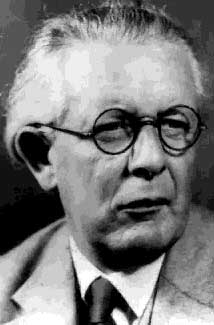 Name:Jean Paiget
Born: on 9 August 1896 in Neuchatel, Switzerland
Died: on 16 September 1980 in Geneva, Switzerland
Education: University of Neuchâtel, University of Zurich
Subjects of Study: natural history and phylosophy,
Field of Professional Study: Psychoanalysis
Discoveries and Studies:
Theory of Cognityve Development
This theory states that children build an understanding of world around them and then they expirience the differences/ simmilarities between what they already know and what they discover.
Sources: http://en.wikipedia.org/wiki/Theory_of_cognitive_development
==========================================================================
 Name: Anna Freud
Born: on December 3rd, 1895in Vienna, Austria
Died: on October 9th 1982 in London, England
Education: Cottage Lyceum in Vienna
Subjects of Study: taught psychoanalysis from father (Sigmund Freud) and languages such as Hebrew, German, Italian, French and English
Field of Professional Study: Psychoanalysis, Psychoanalytic Child Psychology
Studies and Discoveries:
Psychoanalytic Child Psychology
Anna was a teacher and that gave her the chance to observe children. She realized, that her analysis of children differ from Sigmund Freud's analysis of adults. Therefore the belief that children are smaller versions of adults was refueded and thus she created a new branch of psychology, the Child Psychology.
Sources: http://en.wikipedia.org/wiki/Ego_psychology
http://www2.webster.edu/~woolflm/annafreud.html
